How Do Hormones Affect Mood, Weight and Brain Fog?

Most of us were taught to think of hormones in one of two ways: as a monthly inconvenience, or as a problem to fix when something goes wrong.
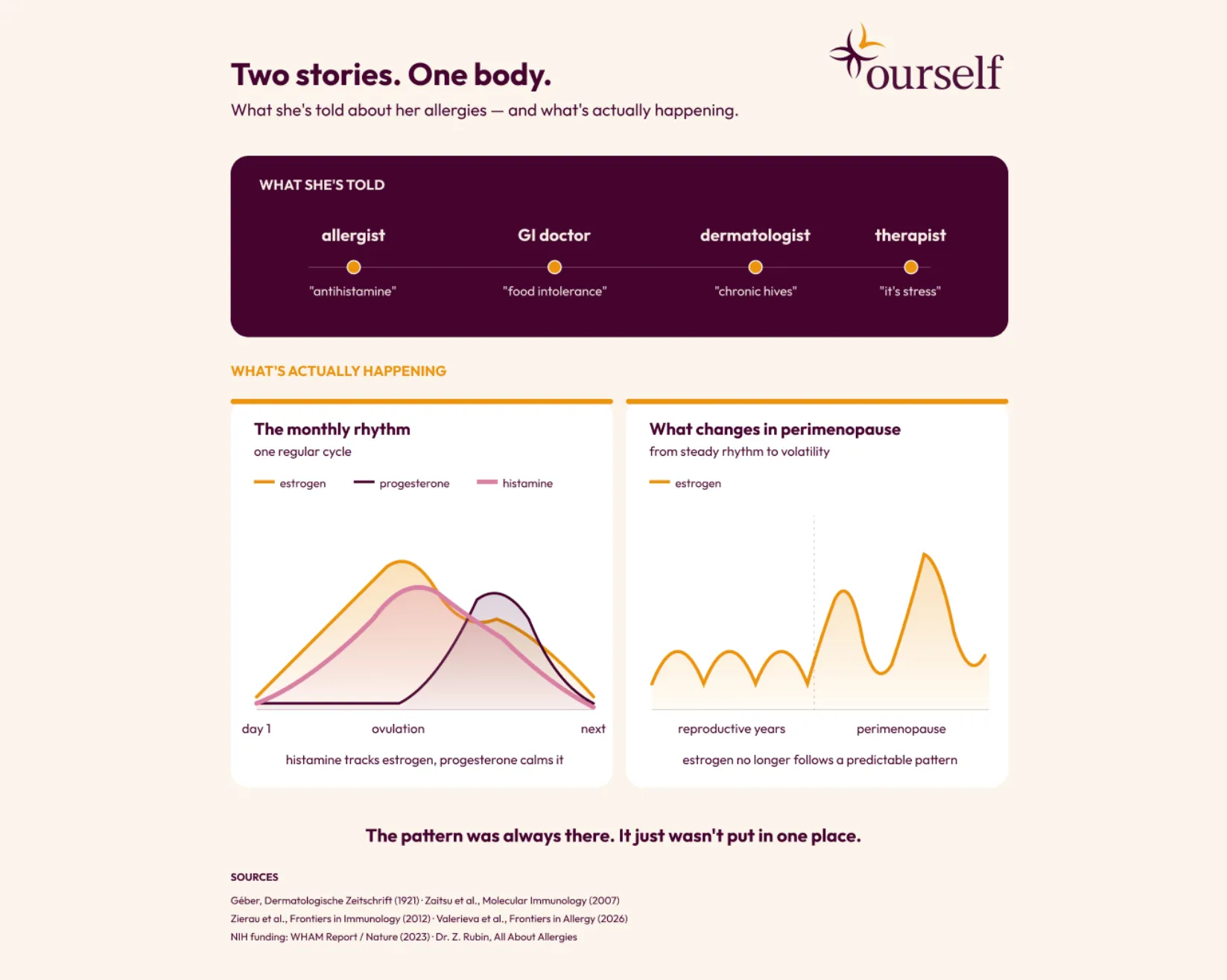
But hormones carry a lot of information. Think of it as a computer processing continuous, real-time data about what's happening in your body — data that most of us were never taught to read. Let alone track.
The anxiety that spikes every month around the same time isn't random.
Estrogen drops sharply just before your period — and with it, so does serotonin.
The weight that shifted without any change in your habits isn't a mystery. Progesterone, cortisol, and insulin all interact — and when one is off, the others follow.
The brain fog that appears mid-cycle, or in your late 30s, or seemingly out of nowhere — that's a pattern that tells you a story. Your story.
Your body is not “failing you”. It's communicating in a language medicine and doctors haven’t always been equipped to translate.
Tracking your hormones and their effects makes sure you walk into every medical appointment already fluent in your own data: with the patterns identified, the timeline documented, and the right questions ready.