What Is Women’s Health? Why It’s Much More Than Reproductive Care

Here are a few numbers that should stop you. Migraines are three to four times more common in women than men and a major source of disability during women’s reproductive and working years. Nearly two-thirds of Americans living with Alzheimer’s are women. Yet neither condition is what most people picture when they hear “women’s health.”
That is because “women’s health” is still too often shorthand for birth control and pregnancy. This narrow frame leaves out what lifelong care requires: supporting wellbeing, reducing risk, preventing chronic conditions where possible, detecting problems earlier, and managing them when they arise.
And when chronic conditions do arise, they often affect women differently—and, in many cases, disproportionately. Low back pain, depression, autoimmune disease, cardiovascular disease, and neurological conditions are not peripheral to women’s health. They are central to it.
That narrow framing is starting to change. Silicon Valley Bank’s newest Innovation in Women’s Health report captures a sector becoming a test case for a more connected model of medicine—one that combines technology, personalization, and integrated care in ways that could improve care well beyond women’s health. Women’s health is no longer a niche limited to reproductive and sexual care. It now includes AI-enabled personalization, diagnostics, devices, biopharma, and new models of care for conditions that affect women uniquely, disproportionately, or differently.
SVB is not alone in seeing the category widen. A 2025 BCG analysis argues that women’s health extends far beyond maternity, sexual, and reproductive care to the conditions that affect women uniquely, differently, or disproportionately—including menopause, osteoporosis, Alzheimer’s disease, and cardiovascular disease. BCG estimates that improving screening and care for those four areas alone represents a $100 billion-plus U.S. opportunity.
This newsletter, Everything Connected, is built on a simple thesis: when healthcare treats women’s symptoms as noise rather than connected signals, it produces worse medicine. Recognizing those connections can improve care for everyone.
Reframing women’s health makes the category both more accurate and far larger. In its January 2024 report, Closing the Women’s Health Gap: A $1 Trillion Opportunity to Improve Lives and Economies, McKinsey finds that sexual and reproductive health, along with maternal, newborn, and child health, accounts for only about 5% of women’s total health burden; much of the unmet need lies in conditions that affect women disproportionately or differently, from migraine and depression to cardiovascular and autoimmune disease.
The stakes are human as well as economic. McKinsey estimates that the women’s health gap amounts to 75 million years of life lost to poor health or early death each year; closing it could add seven healthy days per woman annually. Doing so will require better access to care, diagnosis, treatment, research, and data that reflect women’s bodies and experiences. That broader understanding is already reshaping women’s-health innovation: it is beginning to address prevention, chronic conditions, and aging alongside reproductive health—areas long left out of the category.
AI is one of the clearest examples of that shift. It has the potential to bring together fragmented data, help surface patterns that may otherwise be missed, and make complex information easier to act on between visits. For chronic, variable conditions, that could support more personalized and continuous care—and helps explain why AI-enabled women’s-health companies, by SVB’s measure, command median pre-money valuations roughly three times those of non-AI peers.
AI is already being studied and applied in ways that illustrate that potential. In a 2026 study of 2,418 patients with moderate-to-severe coronary artery calcification, an explainable machine-learning model found that chronic kidney disease was a stronger predictor of major cardiovascular events for women than for men; in women, it emerged as the model’s most important risk factor, while diabetes ranked highest for men.
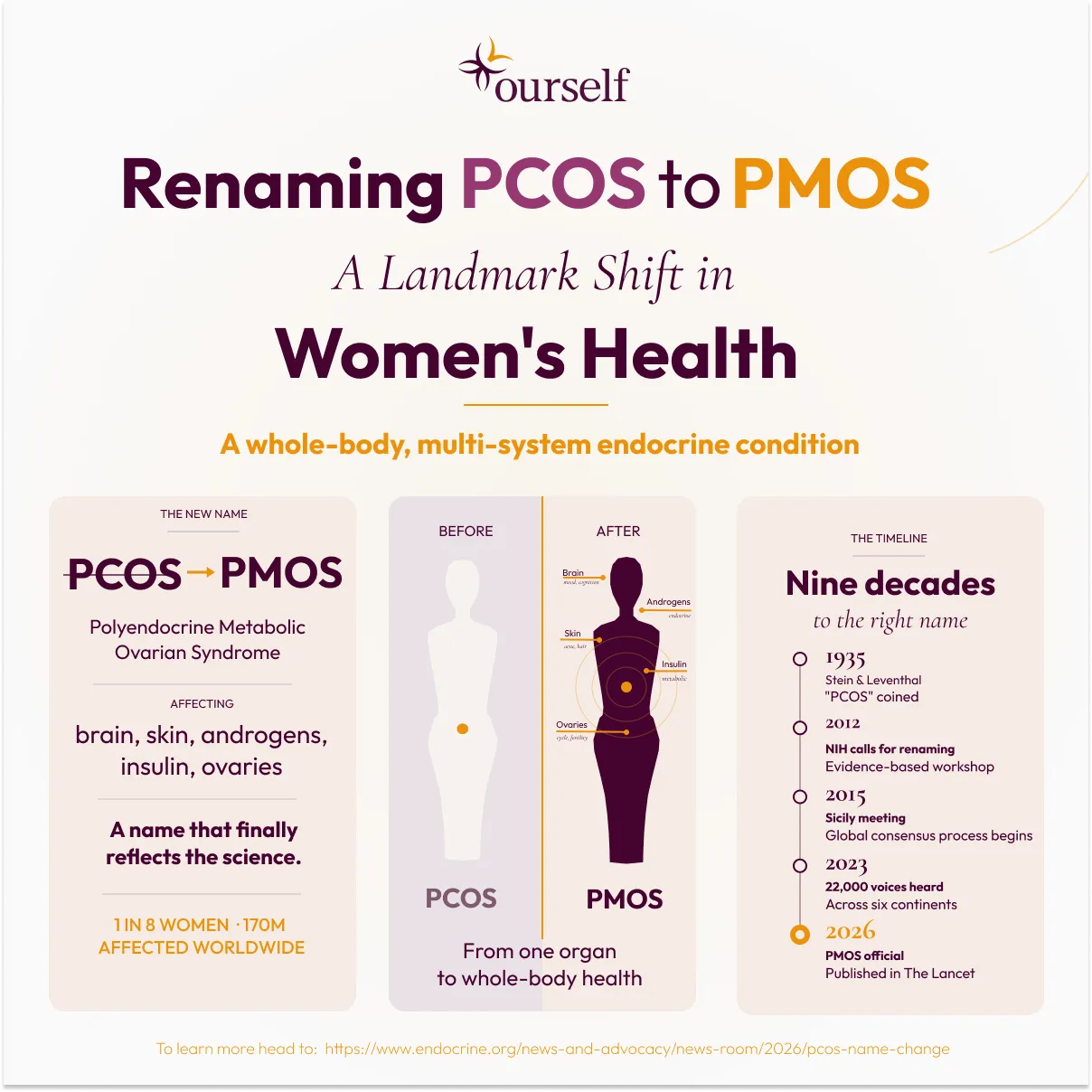
A 2025 systematic review of 80 studies on AI in PCOS found that AI models are being developed using imaging, clinical, biochemical, and molecular data to support diagnosis, risk prediction, and more personalized management of a condition that can present very differently from patient to patient. And a 2026 systematic review and meta-analysis of machine learning for systemic lupus erythematosus found that AI models could distinguish disease subtypes with 91% sensitivity and 94% specificity—an important capability for a chronic condition whose symptoms and severity can vary widely.
Wearables and at-home tests can make chronic care less dependent on the occasional appointment. For women managing ongoing conditions, they can track heart rate, sleep, temperature, glucose, and blood pressure between visits—creating a fuller picture of how symptoms and health change day to day.
Research on wearable monitoring suggests that this fuller picture can matter across cardiovascular, metabolic, respiratory, neurological, and mental-health care. Emerging at-home and wearable hormone monitors could add another layer: making hormonal changes more visible over time. The goal is not more data for its own sake. It is earlier signals, better conversations, and care plans that reflect women’s real lives.
Diagnostics are equally central to chronic care. For many women, the path from symptoms to diagnosis can involve years of referrals and inconclusive tests before getting an answer—delaying treatment and making long-term conditions harder to manage.
High-risk HPV self-collection in health-care settings can make cervical-cancer screening more accessible for eligible women. Emerging multi-omic approaches for PCOS combine clinical history, biomarkers, hormones, and molecular data to support earlier, more integrated detection of a chronic condition that is often difficult to diagnose. Earlier answers can mean earlier treatment—and fewer years spent waiting to be believed.
These examples point to the shift SVB is tracking. The most consequential women’s-health companies are not treating fertility, menopause, and reproductive care as isolated categories. They are building diagnostics, monitoring, and care models around the chronic conditions that shape health across a lifetime—and around the ways symptoms, hormones, risks, and lived experience interact.
That is why women’s health is no longer a niche. SVB’s AI premium is a market signal, not the thesis itself: the larger opportunity is to build chronic care that is more continuous, personalized, and responsive to how women actually experience illness. Done well, this approach can help make care more connected for everyone.
That is the premise behind Ourself: turning a healthcare system built around disconnected episodes into care built around the full reality of women’s lives. Women’s health is not a category at the margins of medicine—it is a test of whether medicine can finally become connected enough to see the whole person.