How Tracking My Cycle Helped My Doctors Finally Connect My Symptoms

Months later, a second symptom showed up. Different systems, different specialists, different waiting rooms. The first symptom slipped out of focus, not because it stopped mattering, but because it lived outside the lane each new doctor was focused on.
And I didn’t know how to connect them either, at first. Why would I? They didn’t look related.
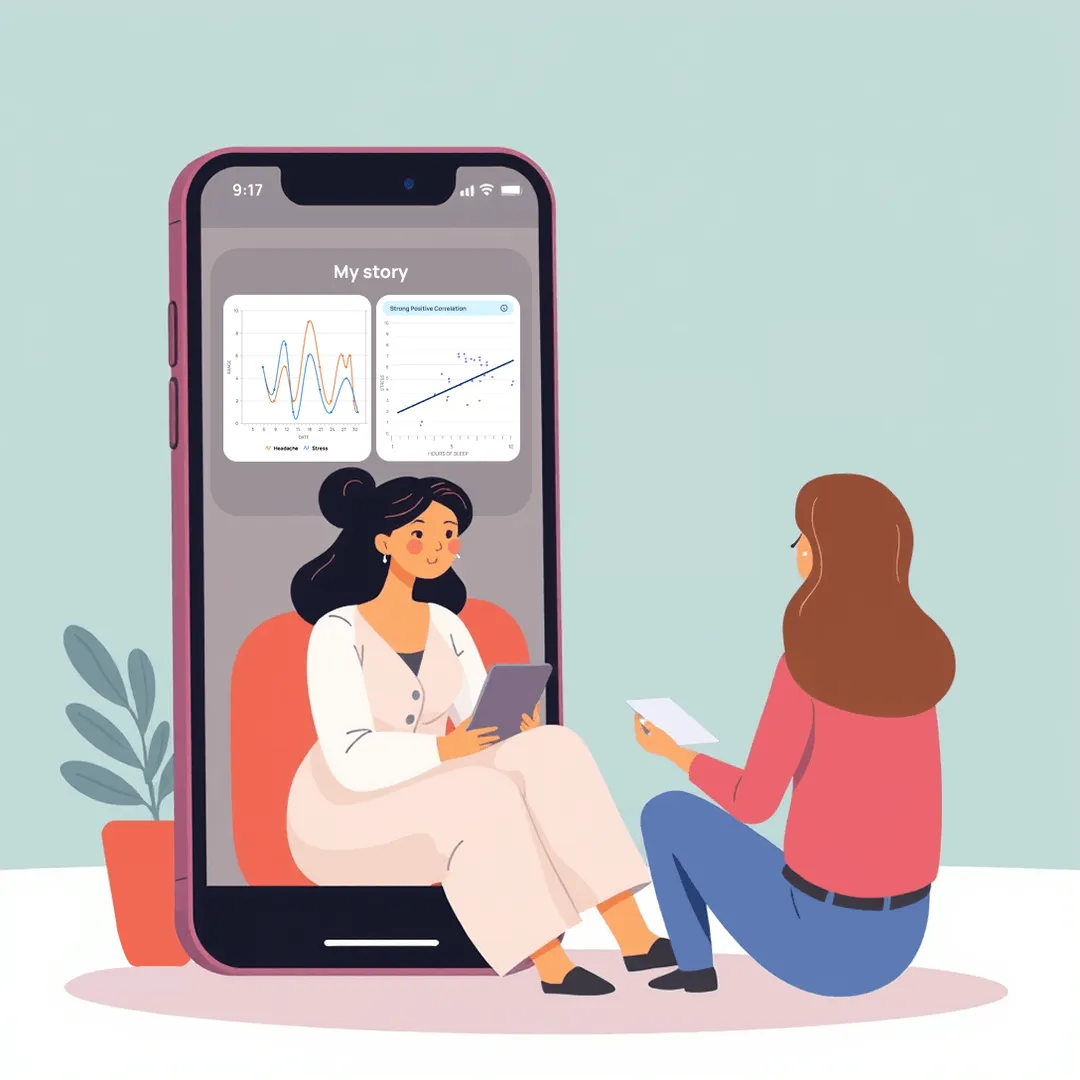
It was only when I started logging everything in one place – dates, symptoms, and my cycle – that I noticed symptom one and symptom two kept landing at the same points in my cycle, month after month. When I then dug into how hormones move across a standard menstrual cycle and compared that to my own tracking, the picture snapped into focus: my symptoms were rising and falling with specific points in my cycle, suggesting they were related and strongly influenced by my hormones.
No one had ever noticed, because no one had stepped back to look at my whole body and my whole timeline, including my cycle, at once.
Once the pattern was in front of me in my own tracking, the connections that had always been there were finally visible — and then my doctors were able to build a treatment plan that actually worked. I was the one who first connected the dots, and my doctors treated it in coordination — exactly the kind of connected care women need, especially in a world where research on our bodies is still playing catch-up.
This is especially important in women’s health, where our care needs to be grounded in research done on us, and that research has to fully incorporate our hormonal systems rather than treating them as an afterthought.
With Ourself, we’re creating a different path: a women’s health app that helps you track, understand, and act on what’s happening in your body, so you can walk into the room with your own data and research — and walk out with a clear plan for your care.