Why Are So Many Rural Hospitals Closing Labor and Delivery Units?

Eighteen. That’s how many hospitals have stopped delivering babies in the U.S. so far in 2026, tracked in real time by Becker’s Hospital Review, updated as recently as July 14. Vermont, Iowa, Ohio, Alabama, West Virginia.
This isn’t a regional story. It’s happening everywhere at once.
When I think about the challenges facing women’s healthcare, I often think about the knowledge gap — data fragmented across research and specialties, the studies that were never done, and the research that stayed hidden beneath more attention to men’s health. But it’s also a resource problem. Resource scarcity is the underlying cause; the access gap is the visible consequence. The map keeps shifting toward urban centers while rural communities are left with fewer clinicians, longer waits, and less infrastructure to hold people up.
Zoom out, and the pattern isn’t new; it’s accelerating. A running analysis from the Center for Healthcare Quality and Payment Reform puts the count at 139 rural hospitals that have stopped delivering babies since the end of 2020, representing a 13% cut to rural labor and delivery capacity. Less than half of rural hospitals in America still offer the service at all, and in a dozen states, it’s fewer than one in three.
That’s the headline. It’s also, I think, the part of the story easiest to see: a hospital closes, a service ends, and there’s a number to point to. What’s harder to see is that labor and delivery was never the only specialty rural communities were going without. It’s just the one more likely to make the news.
The map problem doesn’t stop at the birthing unit
A GIS mapping study out of Texas found that 196 counties — more than three-quarters of the state — don’t have a cardiologist within 50 miles. Comparable gaps also exist for pulmonologists and endocrinologists, the doctors who manage hormone-related and metabolic conditions that disproportionately affect women.
And nationally, more than 60% of federally designated mental health shortage areas are in rural counties, not urban ones.
None of that is an OB-GYN shortage. It’s a specialist shortage, full stop, and it’s part of a broader physician shortage, with general practitioners and family doctors burning out too. Patients feel the access gap first, but scarcity is what keeps widening it.
Why that connects back to something bigger
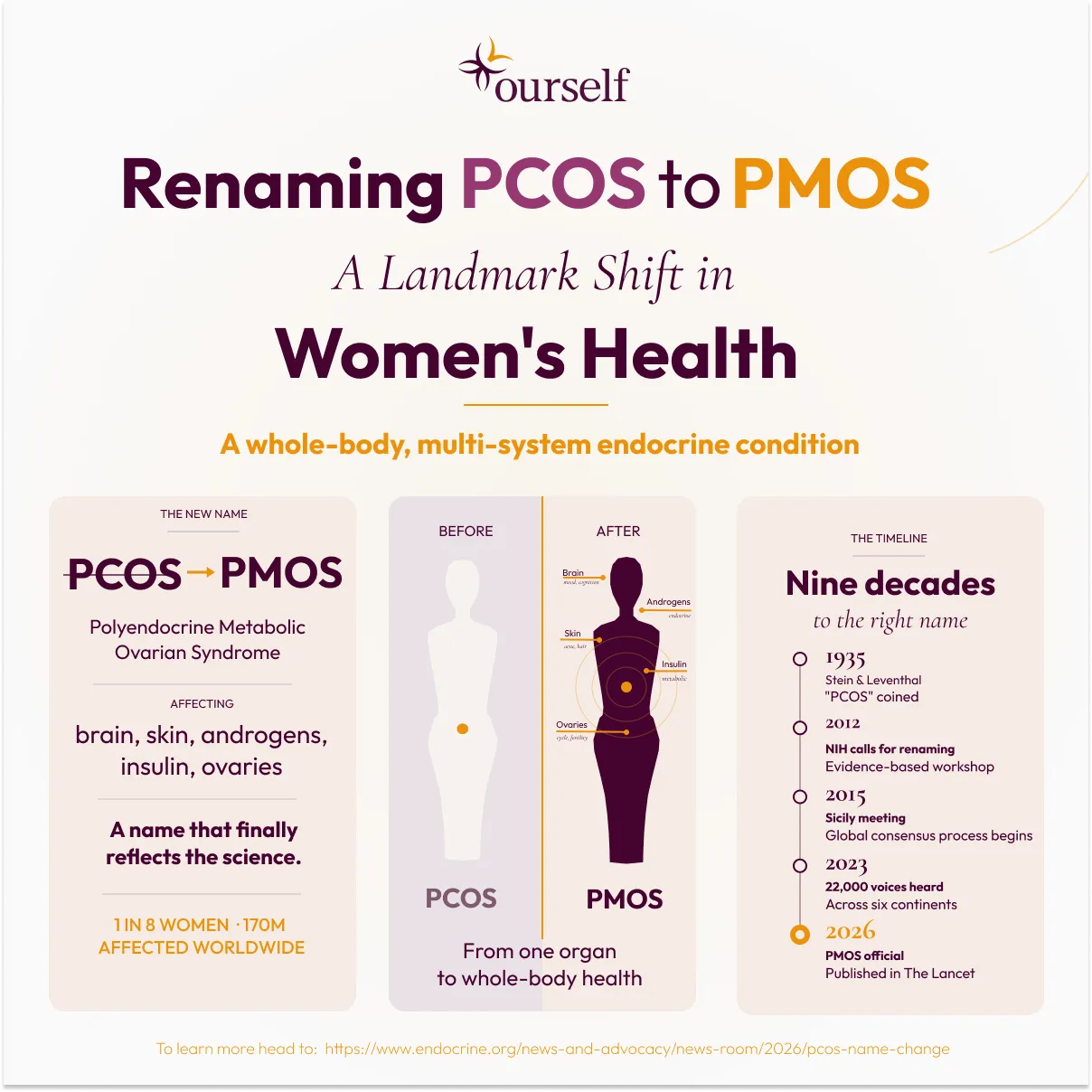
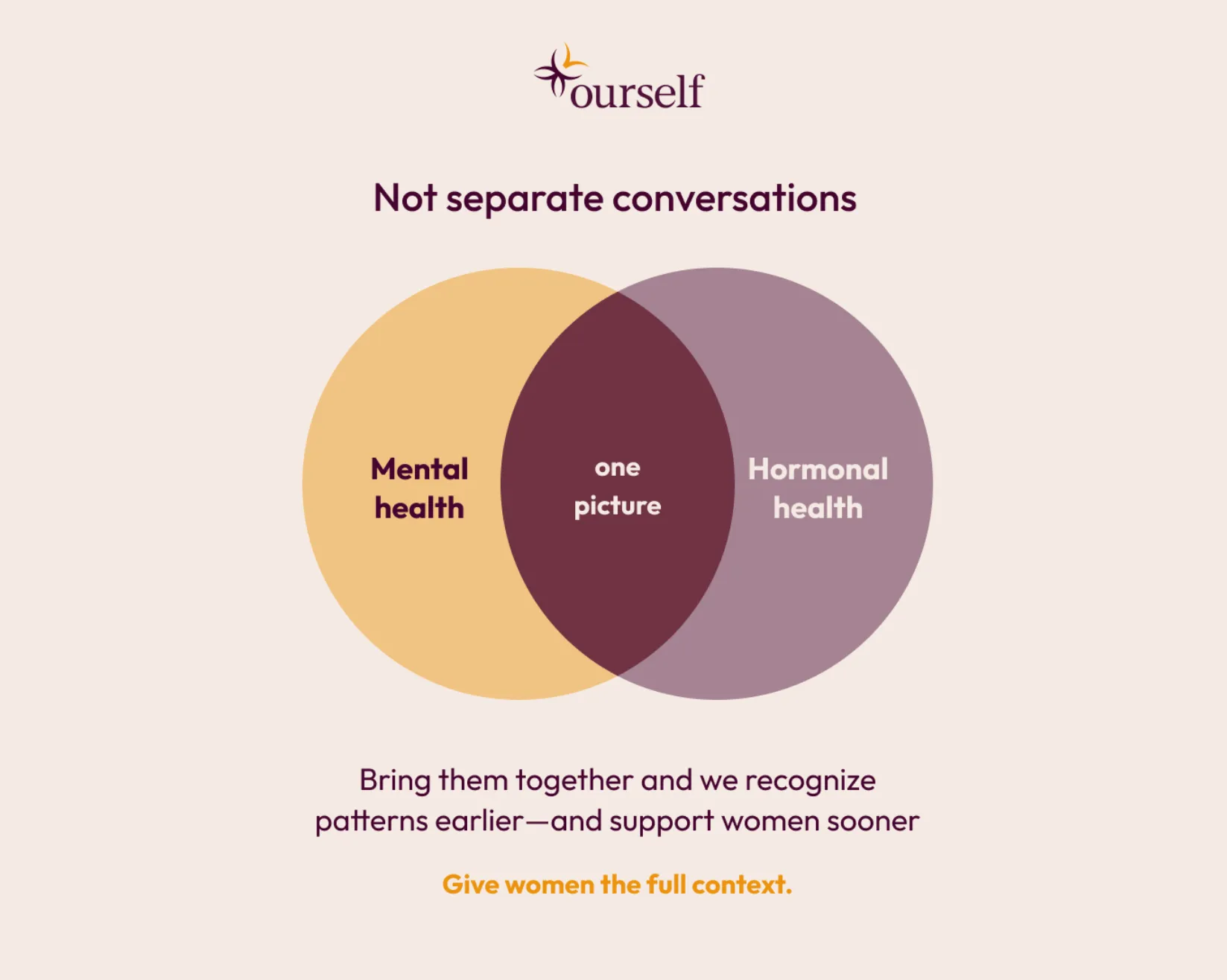
A woman moving through perimenopause isn’t managing one condition. She’s managing a cardiovascular risk that rises with estrogen decline, a thyroid that can shift symptoms in either direction, and a mental health picture that’s more connected to hormonal change than most of us were ever taught.
Researchers are only now starting to study these as one connected system instead of separate departments — reproductive over here, cardiology over there, mental health somewhere else entirely, never talking to each other. That fragmentation was always a problem. In rural counties, it becomes even more pronounced: the specialists may be scattered across different towns, systems, and referral networks, so the burden falls on the patient to bridge the gaps.
And this pattern isn’t unique to rural communities. In urban centers, the geography is less severe, but the same underlying fragmentation still shows up in different forms — long waitlists, overburdened specialists, and care that exists in theory but is still difficult to access in practice.
The mismatch is stark: her body is integrated, but the system is not. Women end up stuck in the middle, trying to piece together care across a structure that separates what biology connects.
Telehealth helps, but it doesn’t close the gap
The instinct is to say: get people online for better access, problem solved. And telehealth has helped — but the data on this is more honest than the pitch usually is.
The Federal Reserve Bank of Atlanta found that rural adults were 42% less likely than their metro counterparts to use telemedicine — and the broadband gaps driving that map almost perfectly onto the same counties already short on specialists.
Even more telling: a national study of nearly 8 million telemedicine sessions found that rural counties with strong broadband still used telehealth less than urban ones. Internet access helps, but it doesn’t guarantee use. Device access, digital literacy, and comfort with a screen instead of a person all shape whether people actually use it.
What’s actually missing isn’t always a doctor
Here’s what I believe, underneath all the stats.
A woman doesn’t need four separate video calls with four separate specialists two counties over in four different directions. What might actually be missing is more constant than that: a place to ask “is this normal,” to better understand how a symptom in one part of her body can connect to another, to get a real answer at 11pm instead of waiting weeks for the next referral.
In a typical six‑week window, the system might see her for one or two days at most. The other forty days, she’s carrying the questions, symptoms, and decisions on her own. That’s the gap we don’t measure nearly as often as the closures on the map, but it’s the one that shapes how care actually feels.
What we need instead
The fix was never just getting everyone online. It was reimagining a system that assumes women have the time, energy, bandwidth, access, and support to piece together their own care from scratch. They don’t. Most women are already managing households, jobs, children, parents, and their own health at the same time, often while navigating long wait times, fragmented referrals, and care that is technically available but still hard to reach. The answer can’t be to ask them to do more.
It’s also unrealistic to assume we can solve this by simply adding more specialists to a system that is already stretched beyond capacity. Doctors are under enormous pressure. We are not suddenly going to be flooded with more of them. So the real question is: how do we fill the gap that already exists?
We need tools that make data collection easy, including solutions that centralize their data and integrate devices. We need tools that can spot patterns and correlations across more data, faster than a person can on their own, and surface the signals that matter most. We need tools that ground those insights in women’s health research, tailor them to what each person is focused on, and give them context and trusted sources. And we need tools that turn insight into action with clear daily steps, so women can keep building momentum toward their goals.
How we can close the gap
Women’s health has been buried for too long under a system and a research model that were never built to prioritize women in the first place. Doing things the same way we always have has not gotten us where we need to go. We need a new approach, and we need to use every tool in our toolbox to get there.
This is where Ourself comes in — where women can use our tracking, insights, research, and program tools, supported by AI, to turn scattered information into something sharper and more actionable in one place on their phone.
That’s where AI can help us: by catching patterns, surfacing what gets missed, and connecting the dots when the system doesn’t. It can make care feel less fragmented between appointments and help turn scattered information into something more continuous, useful, and actionable in everyday life. AI can help close the access gap between what women need and what the system delivers.
That matters because access should not depend on women having the time, energy, or expertise to piece everything together on their own. Between appointments, she should still be met with context, continuity, and support — not left to carry the burden alone.
This is one way we help turn scattered care into something whole.
—-- Adriana