How can women lower
their risk of dementia?


Adriana Torosian is the founder and CEO of Ourself Health, a women’s health app that helps women track, understand and act on how their hormones shape their health. She previously spent 20 years building businesses at Google, Microsoft, and writes about women’s health in her Substack, Everything Connected.
Dementia hits women harder. Here’s how to start protecting your brain.
Tuesday, October 13th was National Train Your Brain Day in the U.S, and my feed – as I’m sure yours – filled up with crosswords, sudoku and memory apps.
I have nothing against a good puzzle, but I spent most of the day thinking about what none of those posts mentioned. Did you know, for example, that at 45, a woman’s lifetime risk of Alzheimer’s is 1 in 5? For a man, it’s 1 in 10.
Of the 7.4 million Americans over 65 living with Alzheimer’s this year, almost two-thirds are women. And globally, the picture looks the same for dementia as a whole. According to the World Health Organization, women account for 65% of dementia deaths, and they carry roughly 60% more of its disability burden than men.
In practice, that means more years spent losing the ability to dress, eat, manage money and recognize loved ones. Put simply, women don’t just get dementia more often; they live with it longer, losing more years of independence to it.
And then there’s the caring. Women provide 70% of the unpaid hours of care for people living with dementia; for many of us, we will spend years looking after a loved one’s brain long before anyone asks about our own.
So this is an article about the day after. About what brain health actually looks like for women once the puzzle posts are gone.
Longevity only explains part of it
For a long time, the answer to “why more women?” was simple. Women live longer, and age is the biggest risk factor for dementia.
That’s true, though incomplete.
A review published in March by researchers at Weill Cornell argues that the longevity explanation is being challenged by a growing body of evidence pointing to a female-specific biology. In particular, the hormonal shifts of the menopause transition.
Researchers listed several factors linked to higher dementia risk in women that remain badly understudied: early menopause, having both ovaries removed before menopause, frequent hot flashes, mood and memory problems in midlife.
Midlife was found to be a window of vulnerability for women, and also a window for prevention. By 2050, more than 1.2 billion women worldwide will be in or approaching menopause. That’s 1.2 billion unique biological processes and risks, and 1.2 billion brains that must be protected well ahead of time.
“Ahead of time” matters more than it sounds. By the time memory problems show up, the brain has usually been changing for years.
A separate study in JAMA Network, published just last month, followed thousands of women for nearly 20 years, and the age at which they reached menopause was linked to how fast their thinking declined and to their risk of Alzheimer’s. It also showed up on brain scans.
Scholars here were careful to call this a definitive association; earlier menopause doesn’t mean a woman is headed for dementia. But it does make the timing of menopause a useful piece of information about her brain. Most of us have never been asked to write it down.
Brain fog gets a similar shrug. Plenty of women in their 40s and 50s are told it’s just stress, or just a natural consequence of getting older. In a June paper, for example neuropsychologist Jessica Caldwell described the menopause transition as a neurological shift as much as a hormonal one, and brain fog as real and measurable. For most women it passes, which is reassuring.
But, as with everything on women’s health, it deserves an actual conversation. What isn’t named doesn’t exist, after all.
Caldwell also makes the point that hormones never act alone. Genetics, chronic disease, lifestyle and social factors all interact to shape how a woman’s brain ages, which is why she argues for an early, whole-person approach to prevention.
That leads to something most prevention advice still misses.
Same risk factors, different impact
Dementia prevention has a blind spot, and it’s the same one medicine has had for decades. It treats the male body as the default and assumes women will fit the template.
The risk factors themselves are well known: blood pressure, physical activity, sleep, depression, education. What rarely comes up in this conversation, however, is whether they affect women and men in the same way. More and more, the evidence says they don’t.
When researchers at UC San Diego compared 13 modifiable dementia risk factors in more than 17,000 middle-aged and older adults, women carried more of them. Several, especially cardiovascular and metabolic ones, were also more strongly tied to poorer memory and thinking in women; high blood pressure in midlife is the clearest example, and it shows up in study after study as harder on women’s brains.
This should change how we read a routine blood pressure check at 48. For a woman, it’s a brain question as much as a heart one.
The Rush Memory and Aging Project adds another complicating layer: what drives preventable dementia, researchers found, differs by sex. In men, lifestyle factors stood out. In women, psychosocial ones did, which the authors tied to the social roles and life experiences women carry.
It all means a woman’s dementia risk is shaped by her biology and by the life she’s lived. The years spent caring for others; the depression that went untreated; the education she may never have been offered. Very little of that fits into a ten-minute appointment, and almost none of it makes it onto a standard risk checklist.
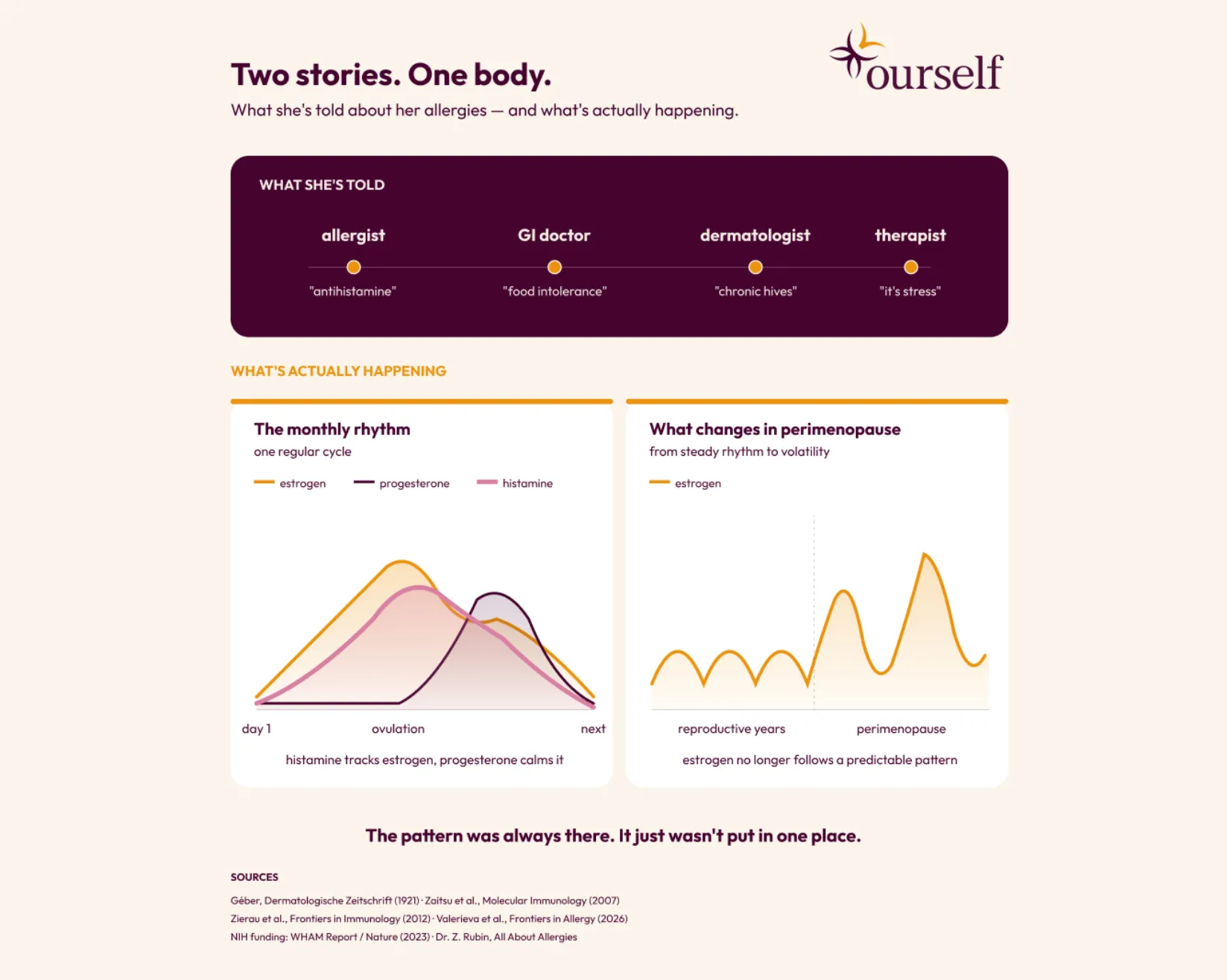
So prevention designed for a generic adult will keep missing women. It won’t ask when your periods changed, and it won’t connect your poor sleep, low mood and forgetfulness, because each of those lands with a different doctor.
The UC San Diego researchers concluded that prevention would likely work better if it were tailored by sex. I’d go a step further, though. For women, it has to start in midlife, and it has to account for how we live, not only what shows up in our lab results.
What training your brain can look like for women
Puzzles have their place in keeping your mind busy when it matters. I’d never tell anyone to put down the crossword.
But if I could change one thing about how women think about brain health, it would be timing. Most of us start worrying about our memory once it’s already slipping and, by then, a lot of the story has already been written.
So I’d start with what you already know about yourself. When did your cycle start changing? When did your periods stop? When did the hot flashes, the bad nights or the foggy afternoons begin? Write it down, even if it feels minor. Nobody else is keeping that record for you.
Then look at your numbers differently. Blood pressure, blood sugar, and cholesterol usually get filed under heart health. For women, they belong under brain health, too.
And ask for the whole picture. If you’re struggling with sleep, mood and memory at the same time, ask your doctor to look at them together. They’re rarely separate problems, even when they get treated that way.
Then, there’s hormone therapy and whether it protects your brain. The honest answer right now is that we don’t fully know.
A Stanford study this year linked estrogen-only hormone therapy to 35% lower odds of an Alzheimer’s diagnosis. Caldwell, meanwhile, noted it hasn’t been shown to prevent cognitive decline in women who reach menopause at the typical age – though it may help those who go through it early.
That uncertainty is exactly why it’s worth raising with a clinician who can weigh it against your own history. The broader point, however, is that women deserve a clearer answer than that. We don’t have one yet because the research hasn’t been done at the scale it needs, and it won’t change until women’s health gets the funding it deserves.
And I come back to the point of this newsletter: Train Your Brain Day is over, but the work that actually protects women’s brains was never going to fit into a single day. It happens across decades, in the year our cycles start to change, in the blood pressure reading nobody linked to memory, in the sleepless nights we were told were normal.
Our hormones, our hearts, our moods and the lives we’ve lived all end up in the same place. The sooner medicine starts treating them that way, and funds the research to back it, the more women will grow old still recognizing the people they love.