What should girls know
about their periods?


Adriana Torosian is the founder and CEO of Ourself Health, a women’s health app that helps women track, understand and act on how their hormones shape their health. She previously spent 20 years building businesses at Google, Microsoft, and writes about women’s health in her Substack, Everything Connected.
Do you remember where you were when you got your first period?
Most women do.
I have asked that question in interviews while developing our women’s health app, and the answers come fast. Not because the details are always clear, but because the feeling is.
“My mom handed me a pad and didn’t say anything else.”
“I was at school and horrified.”
“My dad called my mom’s friend because she was out of town.”
“I learned from my friends.”
“I never wore white again.”
For a lot of girls, a first period arrives as an emergency. Something happens to their body; they do not understand it; and they are expected to know what to do next.
That is not a failure of girls. It is a failure of education, and it’s still happening. In the 2025 State of the Period survey, U.S. teens said they first learned about the menstrual cycle about a year before their first period, on average. Nearly half described that first period as scary.
So timing alone isn’t the problem. Girls are being told something. They just aren’t being told enough.
We teach the ending first
Too often, period education is a short, uncomfortable stop on the way to a larger warning: don’t get pregnant.
Pregnancy prevention, consent, and sexual health matter enormously. But when we start and stop there, we teach girls to see their cycle as a risk to manage. We skip the foundational lesson: a menstrual cycle is one of the clearest recurring signals your body gives you.
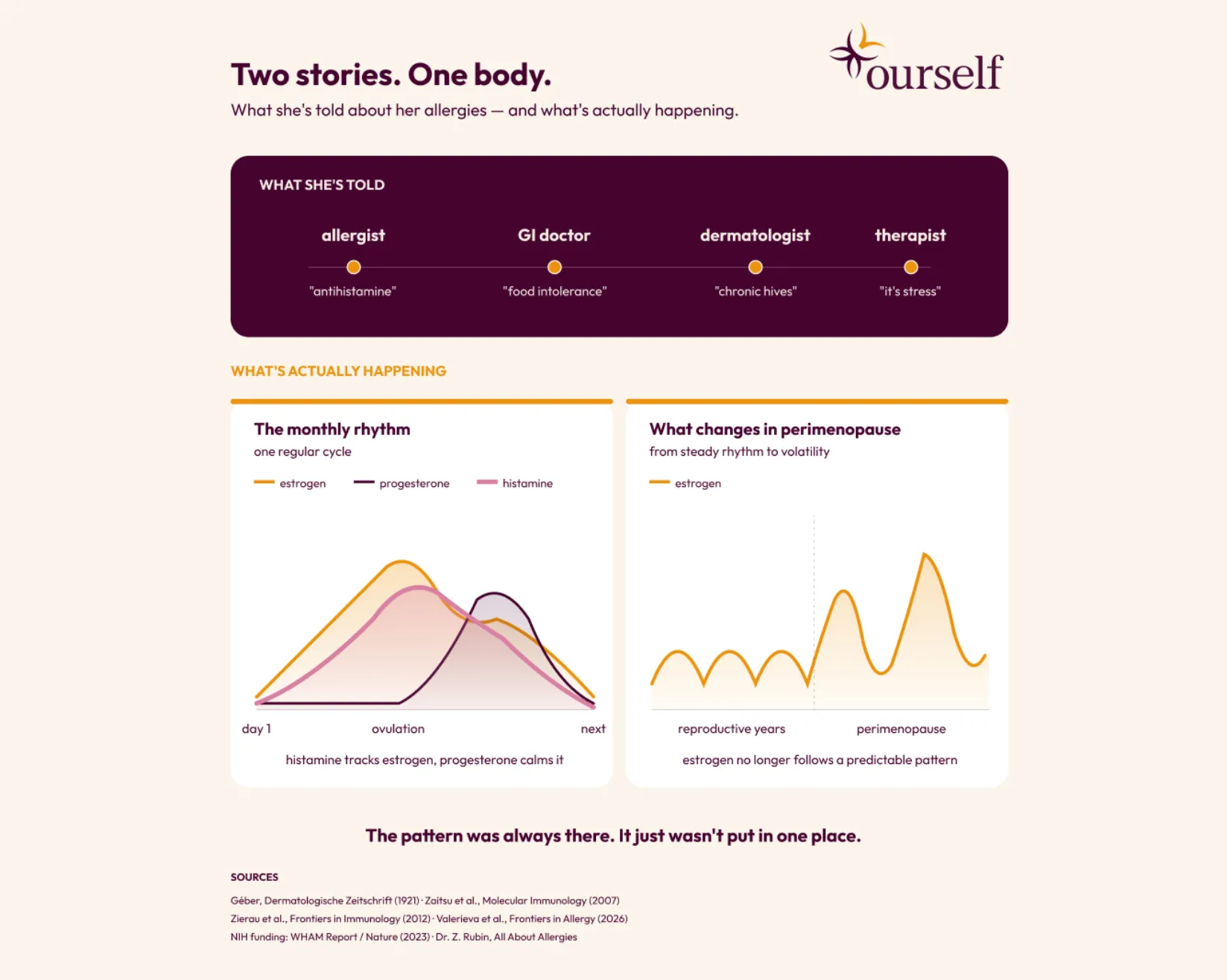
Bleeding is only the visible part of an ongoing hormonal pattern. Each month, estrogen and progesterone rise and fall. Those shifts help coordinate ovulation, build and shed the uterine lining, and shape what many people feel physically and emotionally throughout the month.
So your cycle can show up in places that seem unrelated to your period: sleep, energy, mood, skin, appetite, digestion, concentration, pain, headaches.
Researchers have been making this case for years. A review published last year argues the menstrual cycle should be treated as a vital sign from the first period all the way through perimenopause, the same way doctors treat blood pressure or heart rate.
If your cycle is a vital sign, then teaching it is basic health education. Girls deserve that before they’re left wondering whether they’re imagining things.
Four words that change the story
There are four basic phases worth learning early:
- Menstrual: The days bleeding begins.
- Follicular: The period after bleeding begins, when estrogen rises.
- Ovulation: The release of an egg, often near the middle of the cycle.
- Luteal: The time after ovulation and before the next period, when progesterone rises and then falls.
This does not need to be a complicated biology lesson. Think of it as a map.
Once you have a map, patterns become easier to see.
You may feel more energized or focused around ovulation. You may notice a brief twinge on one side of your lower abdomen, changes in cervical fluid, or a small sustained rise in basal body temperature afterward. In the days before a period, you may feel more tired, bloated, emotionally sensitive, or prone to headaches.
For some people, headaches and migraines are linked to the rapid drop in estrogen before or during bleeding. A 2026 Dutch study of 563 women with migraine tested whether the smaller estrogen dip right after ovulation raises migraine risk too. It didn’t, which points back to premenstrual drop as the moment that matters.
Not every person will experience these changes. Not every symptom is caused by hormones. A headache may be stress, dehydration, lack of sleep, or migraine. A cold is still a cold. But hormones can be part of the explanation, and knowing that gives you somewhere to start.
Your cycle is data
The most powerful thing we can teach girls is not to memorize a diagram. It is to pay attention.
Track your cycle.
Track when bleeding starts and stops. Track pain, flow, headaches, sleep, mood, energy, skin changes, digestion, and anything else that repeats. Do it in a notebook, calendar, notes app, or tracking tool. It does not need to be perfect.
The value is not in producing a flawless record. It is in being able to say: this happens to me, around this time, almost every month.
That observation can change a lot. It can explain why a headache shows up just before your period. It can reveal that your pain is worsening over time. It can help you spot a connection between sleep and your cycle. And it can make a clinical conversation more useful.
The Dutch study, for example, only worked because women logged their headaches and their cycles every single day. The same habit that answers a research question can answer your own.
“I don’t feel right” is hard to act on.
“For the last four cycles, I have missed school on the first two days of my period because of pain and heavy bleeding”, however, is information.
It’s also a common story, with real costs. 36% of teens surveyed last year in the UK reported heavy or prolonged bleeding caused them to miss an extra 1.7 school days a year, and had 27% lower odds of passing five of their national exams.
And it happens closer to home, too. Over 65% of U.S. teens also said last year that period concerns or pain had kept them from doing their best in class or from going to school at all.
When symptoms go unnamed, girls pay for it in their grades, in sports, and in confidence. Your cycle is a source of data about your body, and nobody is grading it. The rest of the world, unfortunately, is certainly grading her.
A lifelong signal
The patterns you see in adolescence will not necessarily stay the same forever.
Cycles can change with age, stress, illness, medications, hormonal contraception, pregnancy, postpartum recovery, breastfeeding, and perimenopause.
And while a change does not always mean that something is wrong, it can be useful information. It can help you know when to ask a question, when to seek care, and when something that has been dismissed as “normal” may actually deserve attention.
That last part is where women lose years.
Take endometriosis. Its symptoms often start soon after a first period, with pain that gets brushed off as “just cramps”. Adult women typically wait five to eight years for a diagnosis, and adolescents often wait more than a decade.
In a study of those teens whose endometriosis was later confirmed via surgery, more than half had already been missing school or activities because of period pain, and only 4.3% had a diagnosis before they ever saw a specialist.
Ten years is the distance between a 14 year old skipping gym class and a 24 year old finally hearing a name for her pain. Her cycle was recording clues the whole time, but nobody taught her to read them, and nobody asked to see them.
The same thing happens at the other end. Perimenopause can begin in the late 30s or 40s, often while periods are still regular and before the hot flashes everyone expects. In a 2026 paper, for one, one in three U.S. women over 35 said they weren’t sure whether they were in perimenopause at all, and the most common reason was trouble figuring out what was behind their symptoms.
New anxiety, poor sleep and brain fog get filed under stress, and the hormonal story goes unread.
It is clear, then, that the cycle tells a much bigger story than reproduction alone. That is why cycle literacy matters long after middle school, and why I keep coming back to it.
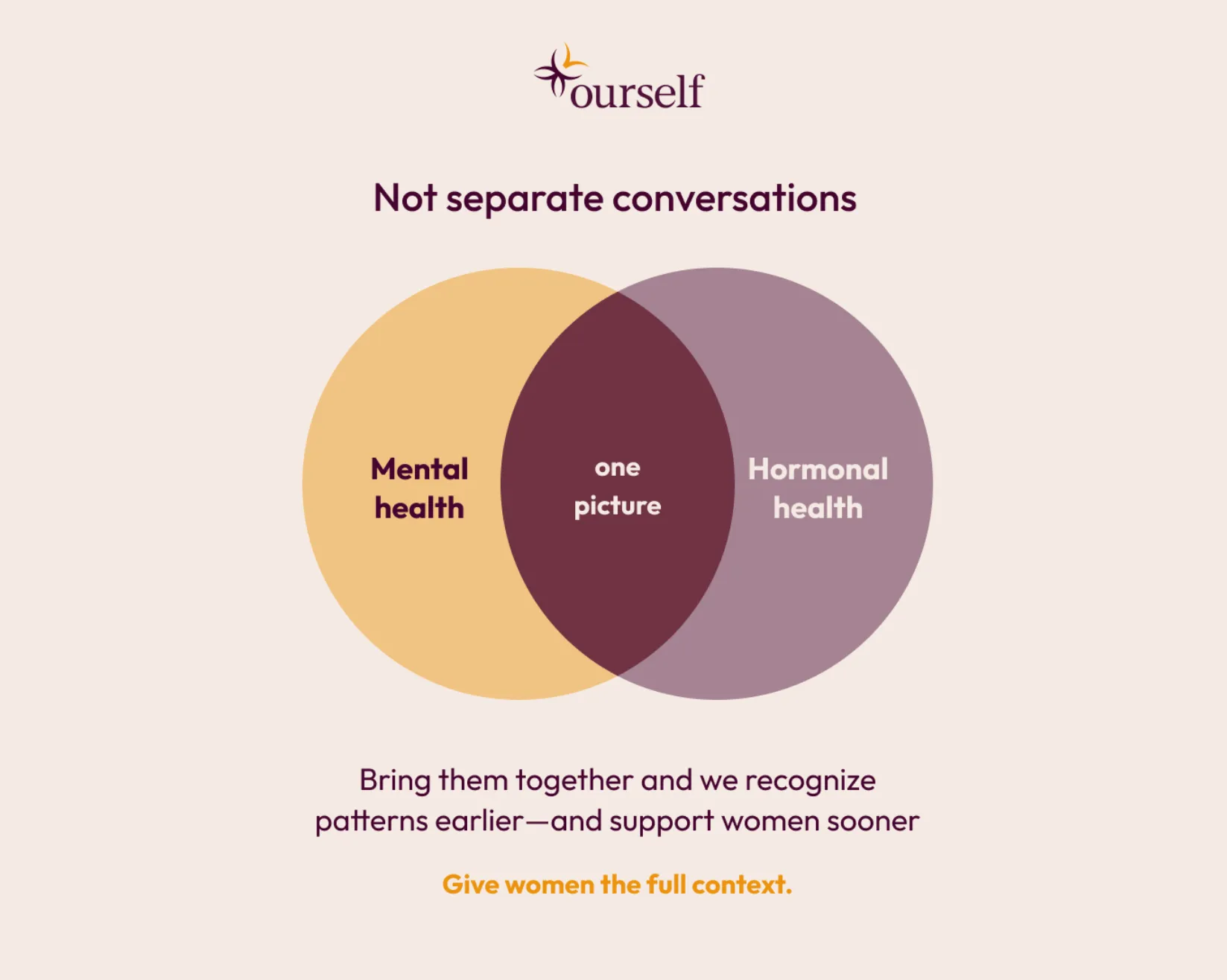
The information women need to advocate for themselves usually exists. It is scattered across years of appointments, apps and memories, and nobody connects it.
A girl who learns to read her cycle at 12 is a woman who can describe her symptoms clearly at 45. She notices when something shifts, and she has the record to back it up. That makes her much harder to dismiss, and gives her the tools to learn to ask for better care.
Learning early prepares her for more than her first period. It prepares her to understand her health across her whole life.
More than a pad
Girls also need the practical stuff. What pads, tampons, period underwear, cups, discs, and reusable products are. They need to know that there is no single best choice. They need to know how to ask for help at school, what to carry in a backpack, and what to do if bleeding begins unexpectedly.
They need to hear that periods can be uncomfortable—but pain that stops you from going to school, playing sports, sleeping, or living your life is worth talking about. Right now, many are hearing the opposite: 73% of U.S. teens said they’d felt pressured to “tough it out” through period pain.
Heavy bleeding, major changes in a cycle, and symptoms that feel severe or new deserve attention too. Heavy bleeding gets overlooked so often that a $50 million global research program launched in 2025 to catch it earlier is called, fittingly, Missed Vital Sign.
And girls need to learn that asking for help isn’t overreacting. This lands squarely on us. Their mothers and their fathers.
The better first lesson
No girl should have to learn everything from a pad passed silently under a bathroom stall door.
She should know what is happening before it happens. She should have language for it. She should have supplies. She should have options. She should know that her body is not embarrassing, inconvenient, or unknowable.
Her period is not just a warning about pregnancy.
It is not just pain.
It is not something to hide.
It is a monthly signal from a body that is doing complicated, remarkable work. Girls deserve to understand that signal before they are expected to manage it alone.